Too Fast Endings 03/02/2011
One thing I like about Amazon is that you get to see what readers are thinking about a book. For example, I've noticed readers complaining when a story ends too fast. After pushing through 250 pages of conflict and suspense, they want a chance to actually enjoy the outcome. When the story screeches to a halt too abruptly, they complain. Maggie Rusnak's feedback on best-selling author Elizabeth Berg's latest novel, The Last Time I Saw You, is a good example. She wrote: "Enjoyable ride but the destination was uneventful... It was like popping a balloon rather than deflating it, and it left me feeling just like the balloon: limp and unfulfilled." Sometimes publishers push authors to meet a too-fast deadline. Sometimes it is a major book buyer, such as Barnes & Noble, who insists the book be on the shelves in time for Christmas shopping that forces the author to wrap it up too fast. But this only serves to hurt book sales and is counter-productive to their bottom line. Here is what Maggie said at the end of her review: "When I was in the middle of the book, I thought of buying a couple of copies for friends. Now, after the disappointing ending, I will recommend they borrow it from the library but not spend money on it." I recall reading a couple of the novels in the Mitford series by Jan Karon, charming character studies of country folk. Finally, Father Tim, the Episcopal priest realizes he is in love with his neighbor Violet. (I think it is in book five.) By this time, the reader is so ready for the joy of a wedding ceremony. But then the author skips over the wedding altogether and next thing you know they are already Mr. and Mrs. It makes you shake your head and say, what happened? Where was the wedding? I was really looking forward to attending that and I never even got to read a single moment. I suspect that so many readers complained that the best-selling author was fairly forced to write book 6: The Wedding Story. To make it up to her readers, she back-tracked and wrote an entire novel about the wedding. Whether it's a movie or a book, the same principle holds. People want a chance to enjoy the ending, not just know that it happened. What are your thoughts? Can you think of a story that ended too abruptly for your satisfaction? Or do you like the wrap-it-up-quick endings? (Please click on the comments to reply.) 1 Comment Wasting Time 02/24/2011
My husband has a way of sending me emails that hit home. Like this one he sent last week: "A man who dares to waste one hour of life has not discovered the value of life." ~ Charles Darwin That made me think. Did I waste time yesterday? What about today? How can I keep from wasting time tomorrow? If you're like me, your time is precious. You cherish time spent with family and friends. You set aside time for God. You are obligated to spend a certain amount of your day at work. At some point, the laundry and grocery shopping must be done. That is unless you're in the habit of going naked and starving. So when do you have time for your personal goals and desires? Those special things you want to do like photography or learning to play the piano or speak Spanish? Or in my case, write my novel. I think it is important to set boundaries on your time. For instance, in our house, we don't turn on the television during our prime mental alertness hours. And, I have a deadline set for completing my novel, which means I have to make progress on it every day. I really do hate wasting time. My husband says he's never seen a person so afraid of being bored as me. That is because I take a book and a notebook with me everywhere I go. I can't stand sitting waiting for someone with nothing to do. If I'm bored, I feel that I am wasting my life. And with so many books to write, I don't dare waste a single hour. How do you feel about wasting time? What do you do to honor the life God has given you? Northwest Christian Writers 05/18/2010
I had the joy of listening to Brandilyn Collins, bestselling novelist and keynote speaker at the Northwest Christian Writers Conference, May 7th. If you ever have the opportunity to hear her talk about her journey to becoming published, run, don't walk. She is as insightful as she is inspiring. Her journey from being a nonfiction writer to a published novelist took 10 years. But then in the next 10 years, she published 19 novels. Wow. She said her first novel was 2,000 words. The audience gasped and laughed when she said that. Serious paring down required, if you know anything about publishing guidelines. Then just when she had mastered the skills of writing a page-turning novel and had an agent on board, she had a life-changing encounter with God and realized she no longer wanted her masterpiece to be published. Another big wow. I loved her talk and I picked up two of her novels afterward. (See What I'm Reading Now.) If you've read one of Brandilyn Collins' books, I'd love to hear your thoughts. To comment, see top right of this post. 1,052,803 New Books 05/10/2010
The numbers are in. Bowker, the company that compiles information about book publishing has released the following figures for 2009: Traditional publishers: 288,355 titles published in 2009 Print-on-demand, self-publishing services: 764,448 titles That is more than one million new books for the year. If you're a reader, that gives you a lot of choices. If you're an author, that is a lot of titles to compete with. The top POD publishers were CreateSpace (21,819 titles), Lulu.com (10,386), Xlibris (10,161), AuthorHouse (9,445), and PublishAmerica (5,689). These companies are not exclusive publishers, so it is possible some of the titles are duplicates. One thing I love about reading these numbers is that it shows a lot of folks are interested in books. Most people feel like they have a book inside of them, and now thanks to POD publishing, those who can't or don't care to sell their manuscript to a traditional publisher, can still experience the joy and satisfaction of holding their own book in their hands. For myself, I chose to sell three manuscripts to a traditional publisher, because I wanted the distribution and publicity they provide. (See Carolyn's Books in the toolbar above.) But I also offer e-books for information that I want to update annually. I haven't used a print-on-demand service yet; but who knows, I might explore that option in the future. I don't think most readers care who the publisher is. Bookstores do. So if an author chooses the POD route, he or she needs to be prepared to market the book themselves. There are a few wild success stories, authors who started off with a self-published book that sold so well, a traditional publisher became involved later in order to keep up with the print demand. A recent example is The Shake, by William P. Young, that has sold over a million copies. Write Something Meanful Or Keep Quiet 04/29/2010
"Either write something worth reading or do something worth writing." That admonition comes from Benjamin Franklin, and I think it's good food for thought. More and more, I ask myself if what I'm writing is worth someone's time to read. How am I enriching someone's life? Am I a source of knowledge, inspiration, or encouragement? Have I saved my readers money and helped them avoid rip-offs and scams? At the end of my book, is the reader better off for having spent a chunk of his or her life going through the pages? Now I'm going to go write something meaningful, and if I don't feel that way later, I'll edit it out. Are You Ready for the New Vook? 04/05/2010
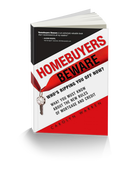
Hang on to your reading glasses -- the vook is coming! No, that's not some kind of vampire. A book with a video implant is called a vook, and it's stirring up a lot of controversy. Some readers favor the traditional book, saying they love the weight and feel of holding a work of writing in their hands. My husband, for example, loves pulpy, soft paper. He says it's "old fashioned" which, in his mind, is synonymous with "excellent" and "preferred." But others say get over it, the e-book is the new thing. Videos are all over the Internet, so why not have a video inside a book you read via your iPhone, iPad, Kindle or Nook? I can see the advantage. In Homebuyers Beware, I show a sample Good Faith Estimate and then explain the deceptive fees. But what if it was a vook instead of a book? I could point to the line under discussion and verbally explain the fee. I think my readers would appreciate that. Especially since the government's new form is so confusing and deceptive. I like to knit, but since I'm a beginner-intermediate level, I find that the still photos of how to execute a complicated stitch are less than clear. A moving video showing me the yarn and needles in motion, now that would be something I could grasp. For novels, well, that is another story. I don't want the publisher's mood music playing while I'm trying to read. I like the author's words to paint the picture for me. I don't need to be interrupted by a two-minute movie showing me what's happening. HOW DO YOU FEEL? THUMBS UP OR THUMBS DOWN FOR THE VOOK? Would a video implanted into your e-book seem cheesy? Dumbed-down? Annoying? Or would it improve the reading experience? Kate London, blogger for the super-smart, edgy Fresh Consulting company discusses the battle that's going on now: www.freshconslting.com/blog Both Kate and I would love to hear your thoughts! (Click on the red comment line, top right of this column. The Trouble With Nonfiction in 2010 03/29/2010
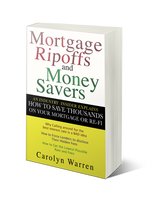
People used to buy more nonfiction books than they do now. Set aside the bad economy. Even accounting for that, the sale of nonfiction is down. If we can figure out why, writers can overcome those obstacles to increase sales of their their own book(s). Two Challenges in Writing Successful Nonfiction The easy answer to selling anything is "give them what they want." So for nonfiction, let's see what that might be. 1) Give them something they can't get for free. As an author, your biggest competitor is the Internet. With so much information available for free, people don't need to buy the books they used to. A generation ago, a person had to buy a book to gain new information; now they have millions of websites available at the touch of their fingertips. Ask yourself this question: Do I provide valuable and useful information readers cannot get for free elsewhere? If so, they will gladly pay to buy your book. 2) Make it interesting to read. We live in a society hooked on entertainment. Readers will not push through a dull book in order to glean a few interesting facts. If your book is boring, if the reader isn't hooked at the beginning and compelled to keep turning the pages until he or she reaches the end, you've got some editing to do. Let your own passion for your topic shine through. You do this by using action verbs and interesting nouns. You express a thought in a different way or in a way that stirs emotions. You sprinkle gripping stories throughout. For example, which sentence does a better job of painting a picture in the reader's mind? #1: Banking executives always want to increase the profitability of their company, no matter how much they make. #2: The fancy cats in their floor-to-ceiling window offices with views of the ocean grumble about the profits. -- From Mortgage Rip-Offs and Money Savers, page 216. Good News for Nonfiction Authors The good news is that nonfiction always has—and always will—make the bestseller list. But doing so is more challenging now in our Internetand Entertainment Age. Perhaps that is not all bad. It forces us to become better writers. What do you think? What makes you give up cash for a nonfiction book? Reach Your Big Goal Faster 03/22/2010
Do you want to write a book, start a home business, publish a website, or achieve another goal? Would you like to get there faster? If so, here's a secret that really works, tested and proven. First, establish your one most important task of the day. I'll call that your Daily Mission. For example, it might be to write 1,000 words a day. Or to submit your proposal to five agents a day. Or to contact five prospective clients a day. For some, it makes sense to set a time frame as your Daily Mission, such as writing for three straight hours between your morning workout and going to the office, or between tucking the kids into bed at 8:00 and retiring yourself at 11:00. You'll soon discover how many words you write, on average, in three hours, which is interesting. If you write 1,000 words/day, you will have an average-length nonfiction book of 60,000 words done in 12 weeks. Or an average-length novel of 120,000 words done in 24 weeks. That is the first draft, of course; and then comes the editing and rewriting, which is also fun. But wait, just how do you accomplish your Daily Mission? The #1 Secret for Daily Mission Success You know how it goes. You're going to write another chapter in your book, but first, you have to check your email real quick. Then you decide to reply to Jason and to see what your mom sent. Next thing you know, two hours have gone by and you haven't written a single sentence on your chapter. Email is an evil thief of Daily Missions. So, you must force yourself to complete your Daily Mission first and foremost. Likewise, don't check your friends on facebook, play Mafia Wars or Farmville, throw in a load of laundry, plan your grocery list, or do any of those other tasks that so easily sidetrack. May I be blunt? If you read email or mop the floor before you write or contact prospects, then you are deceiving yourself. Your biggest desire is not to write a book or to set up a successful online business. That is a fantasy, not a goal. What I Learned From a Millionaire Author When I was a student at the American Artists and Writers Institute, I met the president of the company, Mr. Michael Masterson. He is the author of several best-selling books, an entrepreneur, and business owner. He grew up on the poor side of town, and now he is a millionaire many times over. He travels the world, drinks only the best wines, and when his wife's birthday comes, he'll buy her a three-carat canary diamond or a beach house in the Bahamas. I think that's a person to get a clue from on how to reach a goal. One of his habits is that he works on his important tasks -- what I call the Daily Mission -- before he opens his email. In fact, he never even checks his email until the afternoon slump. Think about that. Why should you devote your best mental and creative energy or your prime time to email or facebook or dirty socks? Shouldn't you give your best to your book? Or your online business? You can just as well tweet or clean when your energy slumps. Like a helpful paperclip, this Daily Mission tip is so simple--and yet it accomplishes so much. If you do this one thing, you'll be surprised at how much faster your big goal becomes a success. Happy writing! Carolyn Warren Stop Dreaming, Start Writing 03/16/2010
The next time you're stuck at a social gathering with no one to talk to, try asking people if they think they have a book inside of them. You have an 80 percent chance of getting an interesting conversation going. That is the percentage of people who want to become an author, according to a survey by the Jenkins Group. So what does it take to go from making your book a dream to actual pages setting on the shelves of Barnes and Noble? For many years, I planned to write a book. In fact, I had two fat file folders stuffed full of articles, fliers, quotations, and other information that would someday go into my book. A Two-Word Warning That Changed My Life One sultry autumn evening in Delray Beach, Florida, I was enjoying a glass of wine with one of the star presenters at a writer's conference. The day's seminars were over, and a group of us were hanging out on the terrace of the restaurant across the street from the writer's event. I was fortunate enough to be at the same table with the brilliant copywriter Clayton Makepeace, a gentle soul who has become a multi-multi-millionaire via his writing. Actually, it wasn't fortune at all. I saw him and his lovely redhead wife at a large round table filled with eager writers, and I spied an opportunity too good to pass up. I sashayed over and asked if one more could fit in. Which is what I love about round tables--there's always room for one more. A couple hours go by and most of the folks have said their goodbyes. That's when I took Mr. Makepeace into my confidence and revealed to him my book idea. "What do yo think?" I asked. First, he thrilled me by saying it was (1) a good idea, and that (2) the timing was right for a book exposing mortgage rip-offs and money saving ideas. Then he scared me half out of my wits by saying if I didn't hurry up and write, someone would beat me to it. "When the time is right for an idea, multiple people all over the country will have the same idea," he said. "In fact, another woman at this very conference told me yesterday she plans to write a similar book." That knocked me out of my dream world straight into reality. "GO FAST," he said. Those two words changed my life. I flew home to Seattle, quit my job, and wrote the book in three months. One month later, I had an agent and the first publisher he presented it to made an offer we couldn't refuse. I'll write more about that on another day. But for now, my message to you is, Go fast! Get that book that's been smoldering inside of you written already. Happy Writing! Carolyn Warren |
Author Bio
Carolyn Warren's first book, Mortgage Rip-Offs and Money Savers, was published in 2007 by Wiley & Sons. It quickly became a best-seller. ArchivesMarch 2011 Categories |

RSS Feed